






‹
›
‹
›
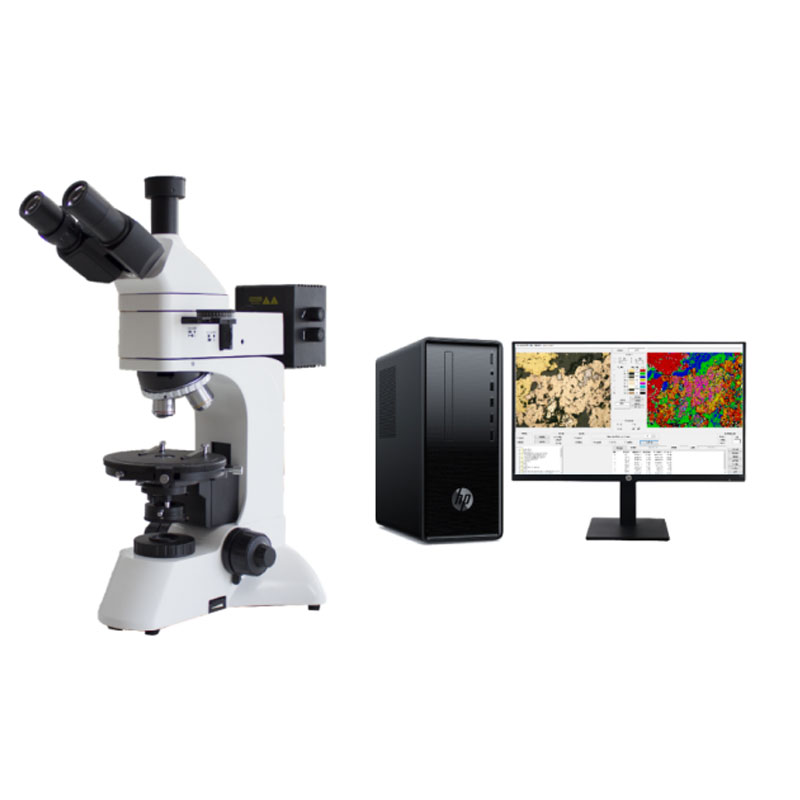
FPL-3230 Transmitted-reflected Polarizing Microscope
Overview of FPL-3230 Transmitted-Reflected Polarizing Microscope
The FPL-3230 Transmitted-Reflected Polarizing Microscope is an essential instrument for researching and identifying birefringent substances by utilizing the polarization characteristics of light. It allows users to perform plane-polarized light observation, cross-polarized light observation, and conoscopic observation. Widely applied in research and inspection fields such as geology, chemical engineering, medicine, and pharmaceuticals, it can also be used for crystalline phase observation of liquid polymer materials, biopolymers, and liquid crystal materials. It is an ideal instrument for research and teaching in scientific research institutions and institutions of higher learning.
Performance Features of FPL-3230 Transmitted-Reflected Polarizing Microscope
lAdopts an infinite optical system and modular functional design.
l Equipped with infinite stress-free long working distance plan objectives.
l Hinged observation tube: Trinocular observation tube with adjustable monocular diopter, tilted at 30°. It enables 100% light transmission photography and can be connected to camera devices.
l Eyepieces: WF10X wide-field plan eyepieces with a field of view of φ22mm, providing a wide and flat observation space.
l Objectives: Stress-free plan achromatic objectives (coverslip-free) with adjustable centers, ensuring the coincidence of the objective center and the center of the rotating stage.
l Coaxial coarse and fine focusing mechanism with adjustable coarse focusing tightness and a limit locking device. The fine focusing graduation value is 2μm.
l The polarizing observation device can be moved into or out of the optical path. Both the polarizer and analyzer can rotate 360°.
l Rotating stage with 360° equal division scale, a vernier graduation value of 6', adjustable center, and a locking device. The vertical effective stroke of the stage can reach 30mm.
l Wide-voltage power supply (85-265V 50/60Hz). Illuminated by a 6V30W halogen lamp with adjustable brightness.
l Sliding analyzer: 360° rotatable with scale and fine vernier.
l Intermediate tube: Built-in push-pull Bertrand lens with adjustable center.
l Stage: Rotating stage with 360° equal division scale, a vernier graduation value of 6', adjustable center, and a locking device. The vertical effective stroke of the stage can reach 30mm.
l Transmitted illumination system: 6V30W halogen lamp with adjustable brightness, providing a bright and clear field of view effect.
l Polarizer: 360° rotatable polarization direction with four gear positions of 0°, 90°, 180°, and 270°, placed under the aperture diaphragm.
l Episcopic illumination system: 6V30W halogen lamp with adjustable brightness. Built-in field diaphragm and aperture diaphragm. Sliding polarizer with 360° rotation. Simple and quick bulb replacement method, which can be achieved without any tools.
Technical Parameters of FPL - 3230 Transmitted - Reflected Polarizing Microscope
Rock (Polarizing) Microscopy Software
Image Analysis
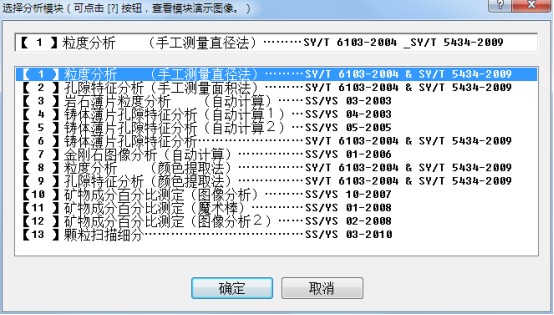
【1】 Particle Size Analysis (Manual Diameter Measurement Method) ………SY/T 6103-2004 & SY/T 5434-2009
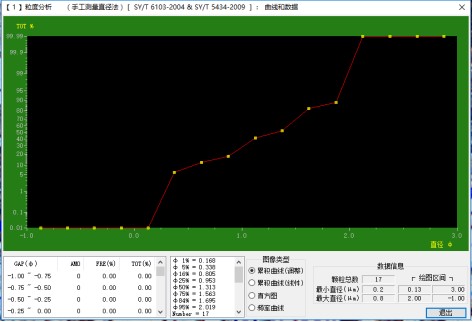
l Measure particle diameters by dragging the mouse; calculate the maximum, minimum and average diameters; automatically generate 4 types of curves including adjusted cumulative curve, linear cumulative curve, histogram and frequency curve; the measurement process can be saved and loaded.
l Analysis Interface
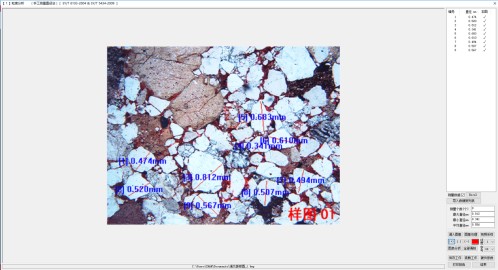
l Measurement Screenshot
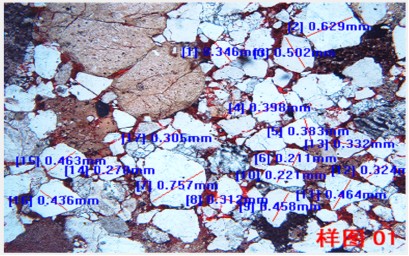
l Analysis Data
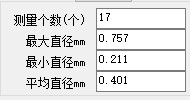
l Data Statistical Chart
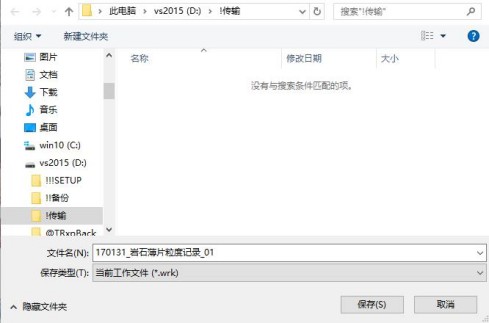
(Save the current work as a file)
【2】 Pore Characteristic Analysis (Manual Area Measurement Method) ………SY/T 6103-2004 & SY/T 5434-2009
l Outline the pore area by dragging the mouse to obtain the pore area, and the software automatically calculates the porosity; the measurement process can be saved and loaded.
l Analysis Interface
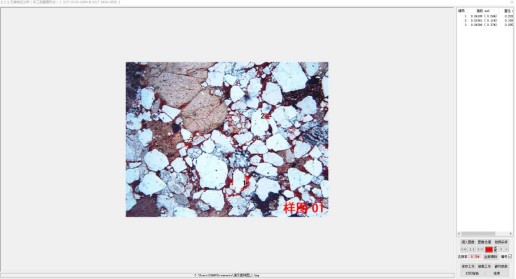
l Measurement Process Screenshot
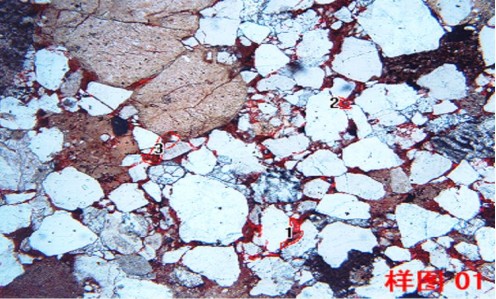
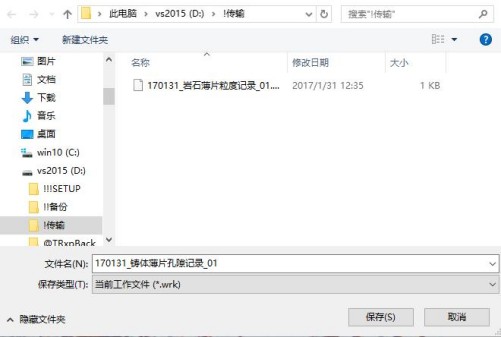
(Save the current work as a file)
【3】 Rock Thin Section Particle Size Analysis (Automatic Calculation) ………SS/YS 03-2003
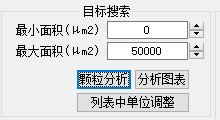
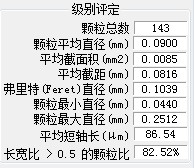
l Select the colors of particles to be analyzed on the image with the mouse (up to 6 colors available), then set the search parameters to identify the target particles and calculate the particle percentage. Meanwhile, it automatically computes a series of data including total number of particles, average particle diameter, average cross-sectional area, average intercept length, Feret diameter, minimum diameter, maximum diameter, average minor axis length, and the proportion of particles with an aspect ratio greater than 0.5.
l Analysis Interface
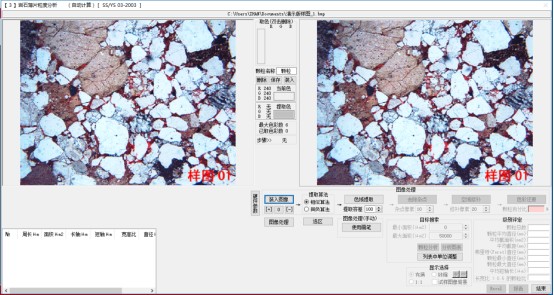
l Click on the image to pick colors
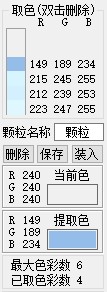
l Perform corresponding processing on the image as required
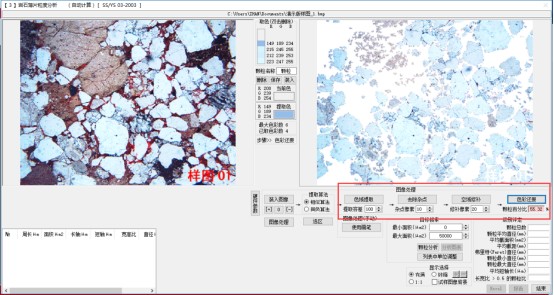
l Click "Particle Analysis" to process the image
l Analysis Data
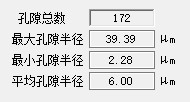
【4】 Cast Thin Section Pore Characteristic Analysis (Automatic Calculation 1) ………SS/YS 04-2003
l Select the color of pores on the image with the mouse, then set the search parameters to identify the target pores. The software will automatically calculate the porosity, as well as a series of values including total number of pores, maximum pore radius, minimum pore radius and average pore radius.
l Analysis Interface
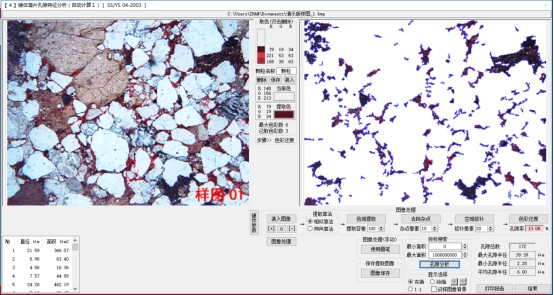
l Analysis Data
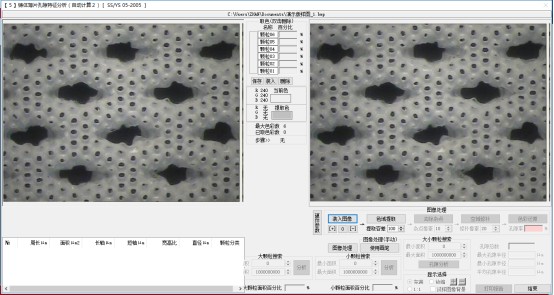
【5】Cast Thin Section Pore Characteristic Analysis (Automatic Calculation 2) ………SS/YS 05-2005
l Select the color of pores on the image with the mouse, then set the search parameters to identify the pores. The software will automatically calculate the porosity, as well as a series of values including total number of pores, maximum pore radius, minimum pore radius and average pore radius.
l Analysis Interface
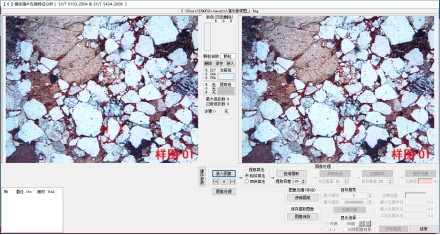
【6】Cast Thin Section Pore Characteristic Analysis ………SY/T 6103-2004 & SY/T 5434-2009
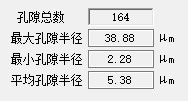
l Select the color of pores on the image with the mouse, then set the search parameters to identify the pores. The software will automatically calculate the porosity, as well as a series of values including total number of pores, maximum pore radius, minimum pore radius and average pore radius.
l Software Interface
l Analyzed Data
【7】Diamond Image Analysis (Automatic Calculation) ………SS/YS 01-2006
l Select the target color on the image with the mouse, then set the search parameters to identify diamond particles. The software will automatically calculate the area percentage of diamonds, as well as a series of values including total number of pores, maximum pore radius, minimum pore radius and average pore radius.
l Software Interface
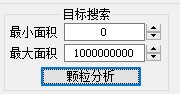
l Analyzed Data
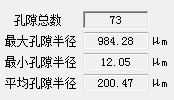
【8】Particle Size Analysis (Color Extraction Method) ………SY/T 6103-2004 & SY/T 5434-2009
l Select the colors of particles to be analyzed on the image with the mouse (up to 6 colors available), then set the search parameters to identify the target particles and calculate the particle percentage. Meanwhile, it automatically computes a series of values including total number of particles, average diameter, average cross-sectional area, average intercept length, Feret diameter and other related parameters.
l Software Interface
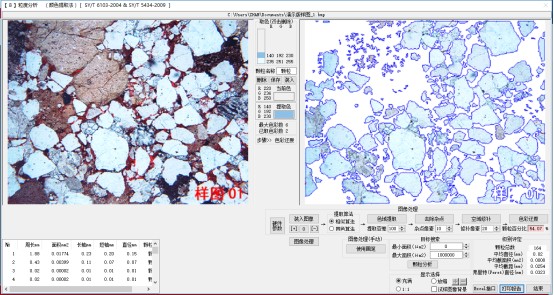
l Analyzed Data
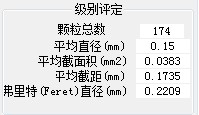
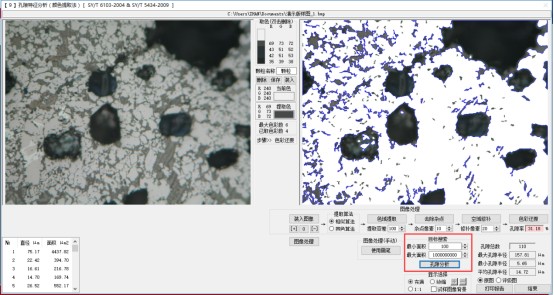
【9】Pore Characteristic Analysis (Color Extraction Method) ………SY/T 6103-2004 & SY/T 5434-2009
l Select the colors of pores to be analyzed on the image with the mouse (up to 6 colors available), then set the search parameters to identify the target pores and calculate the porosity. Meanwhile, it automatically computes a series of values including total number of pores, maximum pore radius, minimum pore radius, average pore radius and other related parameters.
l Analysis Interface
【10】Mineral Composition Percentage Determination (Image Analysis) ………SS/YS 10-2007
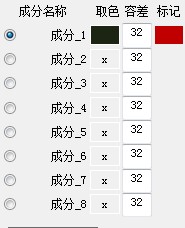
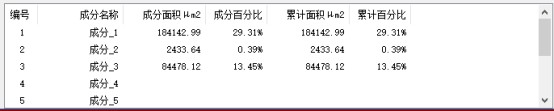
l Select the colors of 8 types of components with the mouse, and set the tolerance for each component. Based on these data, the software identifies the corresponding structures on the image and calculates their area and area percentage. It supports both single-image analysis and batch analysis of all images in a specified directory.
l Analysis Interface
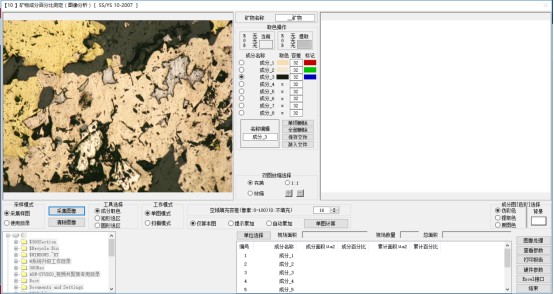
l Click the corresponding component and pick its color on the image.
l Click the "Single Image Calculation" button to perform the analysis.
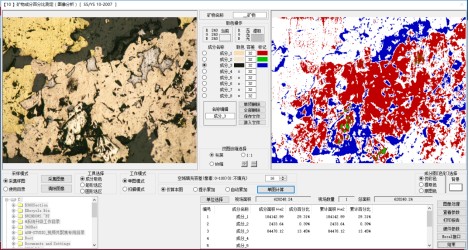
l Data List
【11】Mineral Composition Percentage Determination (Magic Wand) ………SS/YS 01-2008
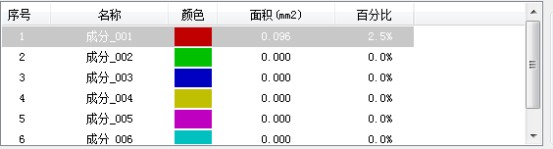
l Select the structures to be analyzed on the rock image with the magic wand tool, and the software will calculate their area and area percentage.
l Analysis Interface
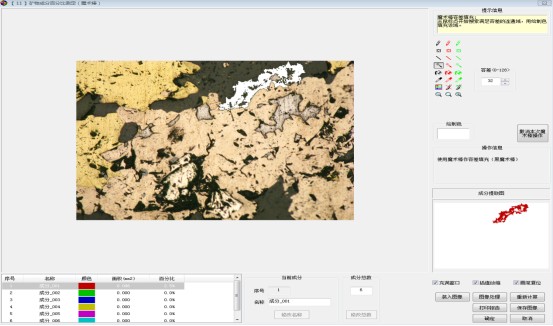
l Analyzed Data List
【12】Mineral Composition Percentage Determination (Image Analysis 2) ………SS/YS 02-2008
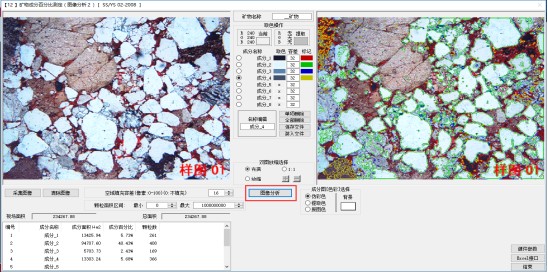
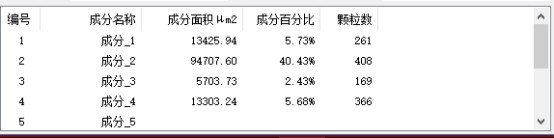
l Select the colors of 8 types of components with the mouse, and set the tolerance for each component. Based on these data, the software identifies the corresponding structures on the image and calculates their area and area percentage.
l Analysis Interface
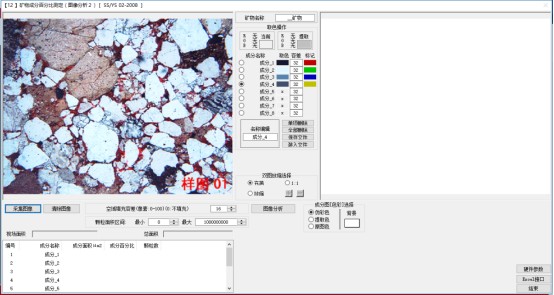
l Click the corresponding component and pick its color on the image.
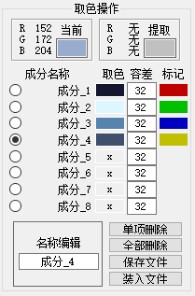
l Click the "Image Analysis" button to process the image
l Analyzed Data List
Shandong Laishi Automation Technology Co., Ltd. (hereinafter referred to as "Laishi") is composed of a technical team with more than 10 years of research and development and manufacturing experience. The registered capital of the company is 3 million yuan. We specialize in the research and development, production, and sales of various desktop hardness testers and metallographic sampling equipment, and provide professional research and sales services for physical and chemical testing instruments, laboratory equipment, analytical equipment, and automation equipment.
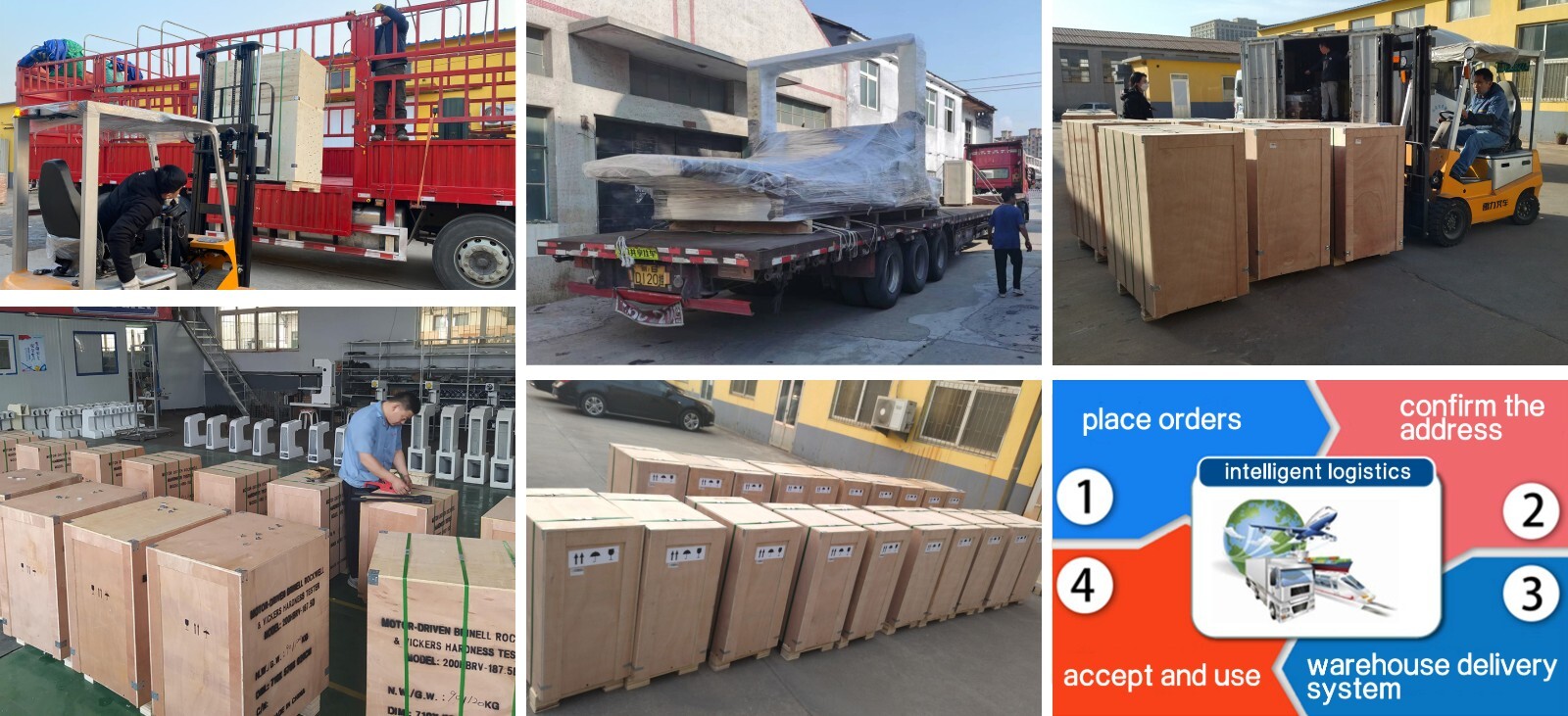
Packaging and Shipping
Have an inquiry or some feedbak for us? Fill out the form below to contact our team.
Related Product Recommendations
Search Starts Here
Our Email