






‹
›
‹
›
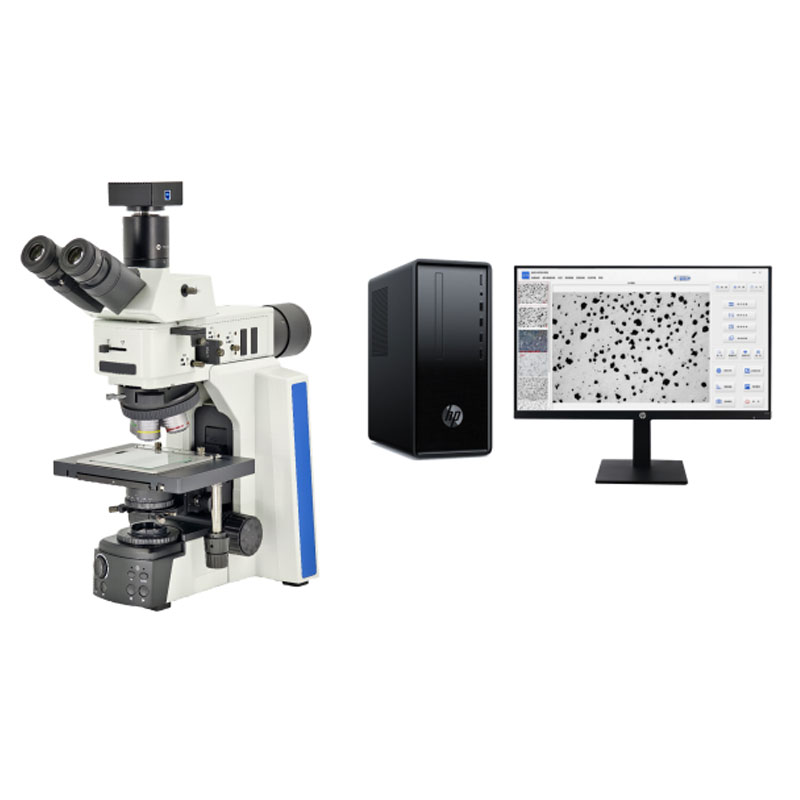
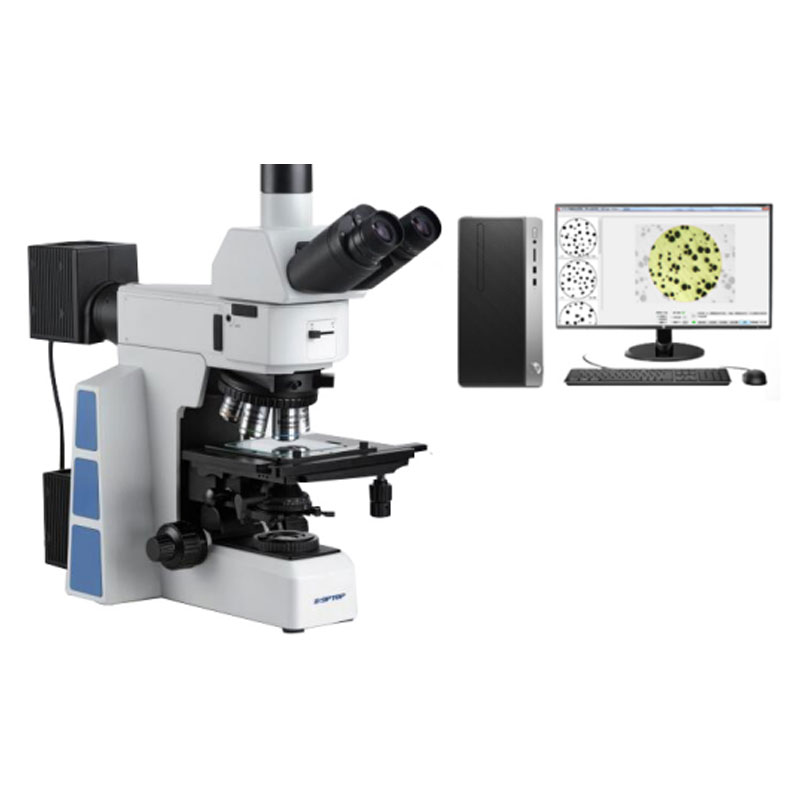
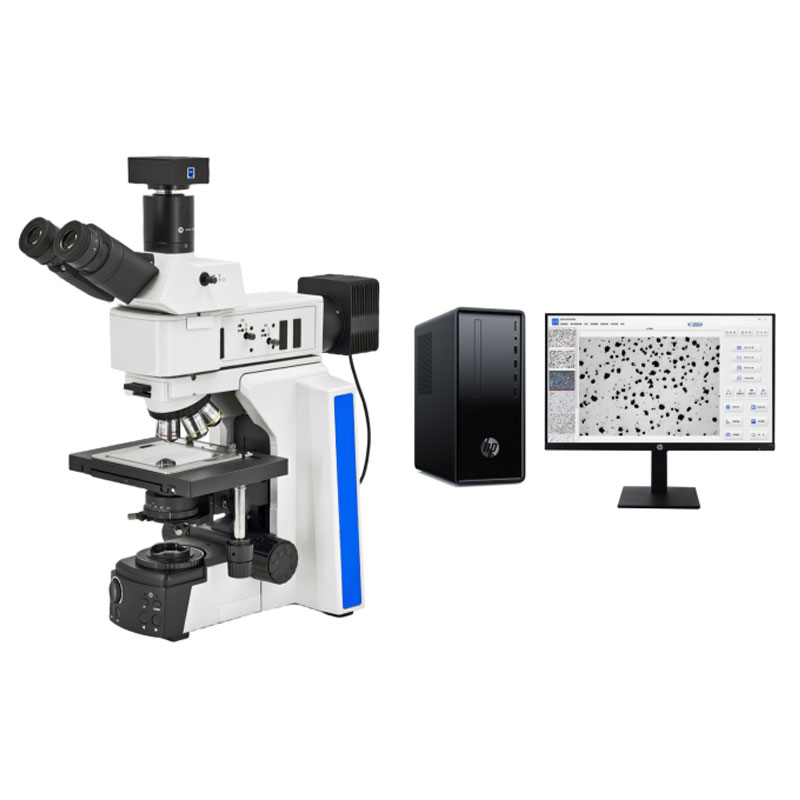
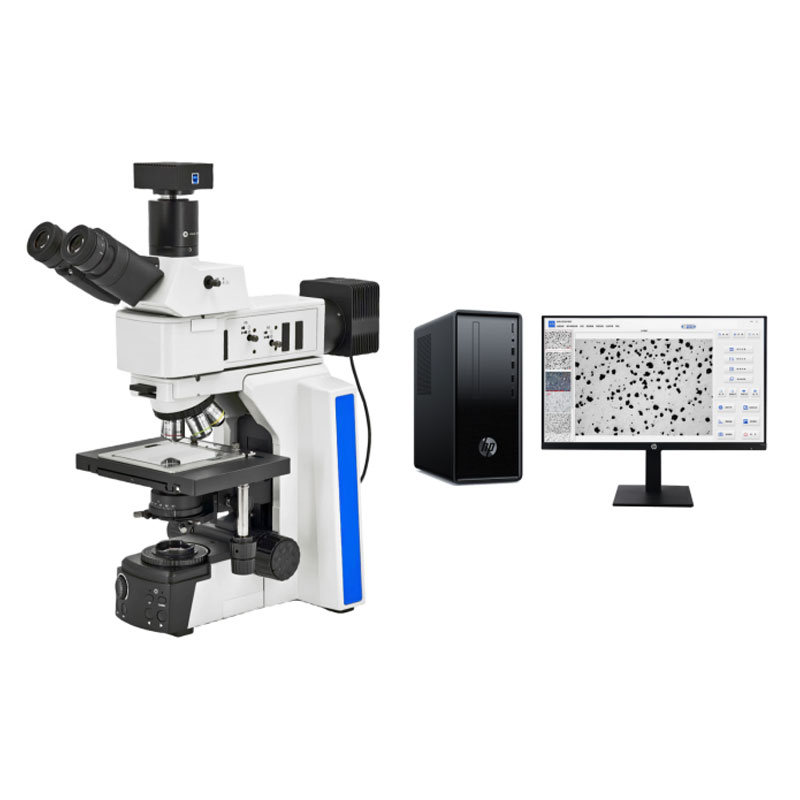
FZ611-W Upright Metallographic Microscope
FZ611 Upright Metallographic Microscope- Product OverviewMicroscope - Product
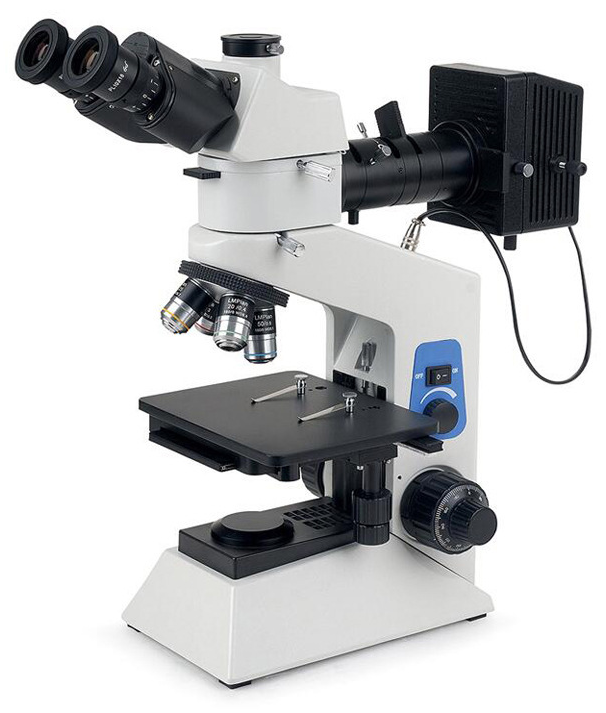
The FZ611 Upright Metallurgical Microscope integrates multiple observation functions such as bright field, dark field, polarized light, and DIC (Differential Interference Contrast). Its rich observation methods can meet your testing needs, and functions can be selected according to actual applications.
Product Features of FZ611 Upright Metallurgical
lWide-beam imaging system design, supporting a world-leading ultra-wide field of view observation of 23mm, bringing you a brand-new large-field-of-view experience.
l Objective lens brightness memory function: it memorizes the brightness value of each magnification objective lens separately, and the brightness can be adjusted automatically when the objective lens is switched.
l Equipped with an encoded nosepiece: the encoded nosepiece integrates the microscope's hardware settings with the FCL-RS image measurement software. When switching objective magnifications, it can also automatically adjust the calibration values recorded in the software, eliminating measurement errors caused by forgetting to switch the software magnification.
l Configured with bright-dark field semi-apochromatic objectives to improve optical imaging effects.
l Excellent polarization system, including a polarizer insert and an analyzer insert, which can perform polarization detection. In semiconductor and PCB detection, it can eliminate stray light and make details clearer. The 360° rotatable analyzer allows convenient observation of the specimen's state under light of different polarization angles without moving the specimen.
l Differential Interference Contrast (DIC) imaging system (optional): it can convert subtle height differences that cannot be detected under bright field observation into high-contrast light-dark differences and present them in the form of three-dimensional relief, such as LCD conductive particles and scratches on the surface of precision disks.
l Neutral density filter linked bright-dark field observation design: the lever at the front of the illuminator enables more convenient switching between bright and dark field observation, and is equipped with a neutral density filter linkage function. This prevents the user's eyes from being stimulated by strong light when switching from dark field to bright field, improving the comfort of use.
l High-performance objective nosepiece: the center of the objective lens on the adjustable-center objective turret is adjustable. It adopts a precision bearing design, featuring light and comfortable rotation feel, high repeat positioning accuracy, and zero eccentricity after objective lens switching.
l Brand-new structural design: high-rigidity lens body structure, newly designed integrated T-shaped frame, made of full-metal high-pressure die-casting, with excellent stability. During high-magnification observation, there is no image plane jitter, which further ensures detection accuracy.
l The episcopic illuminator adopts a Köhler illumination system, with a field diaphragm and an aperture diaphragm, and preset slots for polarizer, analyzer and filter. A single 10W LED warm white light illumination can minimize the observer's visual fatigue.
l The field diaphragm and aperture diaphragm adopt a pull rod device, with adjustable centers, which can flexibly adjust the size of the illumination range and effectively avoid the influence of stray light on the image.
Product Technical Specification Table of FZ611-W Upright Metallurgical Microscope
FMIA2025 Genuine Metallographic Image Analysis Software
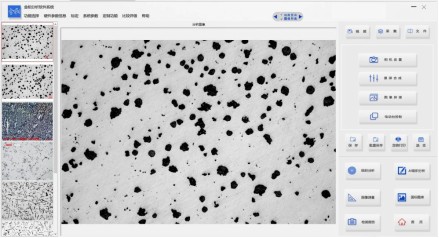
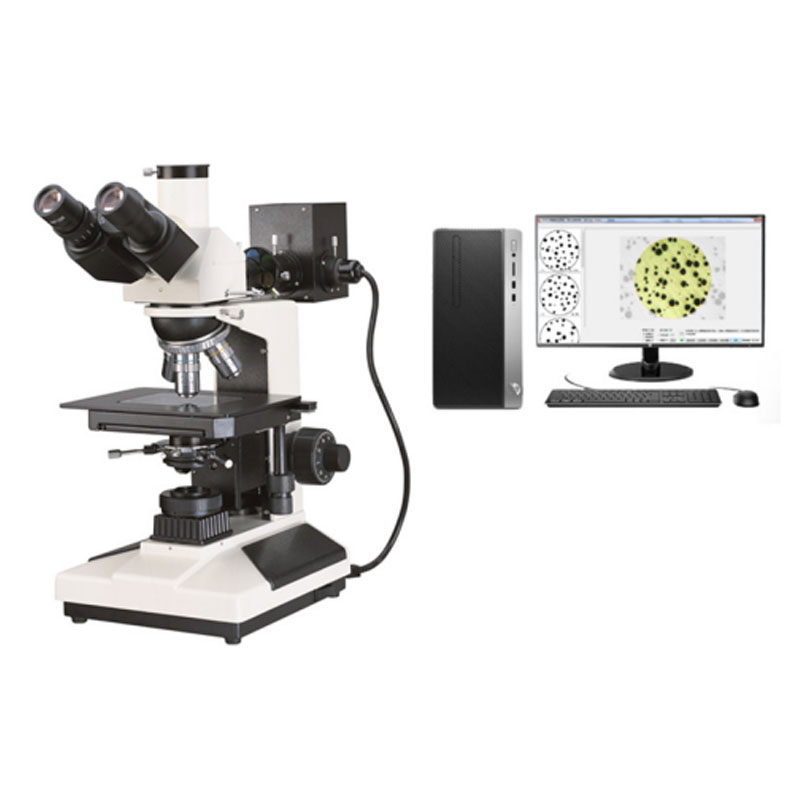
FMIA2025 Metallographic Image Analysis Software is a brand-new metallographic image analysis software system developed by our company. We developed it by first integrating the metallographic testing needs of current casting enterprises, auto parts manufacturers, heat treatment companies, bearing steel industry, power system industry, railway parts industry, and various relevant testing companies. Then, to improve product qualification rates and help enhance the testing capabilities of various laboratories, we collected requirements and suggestions from experts in various industries, and finally launched this system.
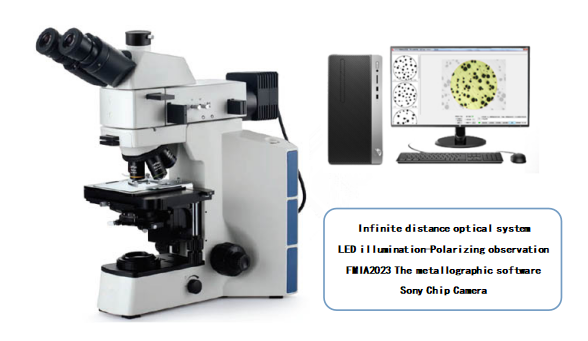
The FMIA2025 version of the Metallographic Image Analysis Software has undergone a comprehensive revision and upgrade. The system covers a large number of domestic and international metallographic testing standards, and integrates both quantitative and qualitative analysis functions. It has added new features such as depth-of-field synthesis and image field stitching. With a concise interface, it allows for continuous shooting of multi-field images and centralized microstructural analysis of images. The operation is more convenient, eliminating the cumbersome steps of previous software versions and making testing faster and more efficient.
We have created a brand-new set of "professional-accurate-efficient" metallographic analysis tool systems to simplify metallographic analysis.
The national standard library of the software system contains hundreds of categories, basically covering commonly used metallographic standards andmeeting the metallographic analysis and testing requirements of most institutions. Relevant categories can be opened according to the needs of different industries to satisfy industry testing requirements. All modules can be used for free for life, and standard upgrades are also provided free of charge for life.
In view of the continuous increase in new materials and imported grade materials, for materials and evaluation standards that have not yet been included in the software, customized inclusion and entry can be provided separately.
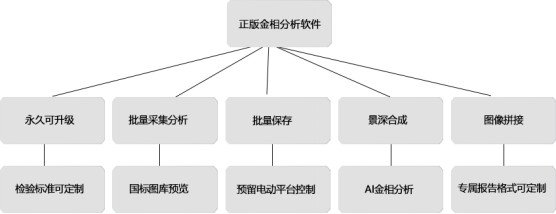
Product Advantages and Function Introduction of FMIA2025 Metallographic Image Analysis Software:
● Batch Shooting, Acquisition and Archiving of Video Images: It offers multi-image batch processing functions such as batch shooting, batch name setting, batch saving, and batch fixed-magnification printing. These functions make the batch sample inspection process more convenient and efficient.

● Camera Settings: It supports the adjustment of functions including exposure time, gain, sharpness, saturation, gamma value, contrast, brightness, white balance, and black balance.
● Image Calibration: The calibration function has been fully upgraded, enabling one-click completion of parameter calibration for all objective lenses. Compared with the original calibration method, the new calibration method is more convenient and faster to operate.
● Image Processing Functions: It includes functions like color separation, grayscale conversion, threshold segmentation, binarization processing, image enhancement, inverse adjustment, sharpening adjustment, scratch and stain removal, and image histogram.
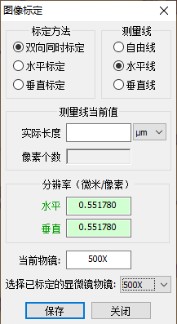
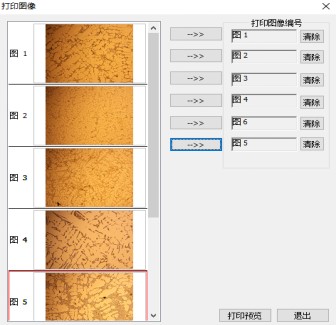
● Fixed-Magnification Printing Function:It supports functions including fixed-magnification printing of multiple images, custom image naming, scale parameter setting, export to PDF/Word/Excel formats, and print preview.
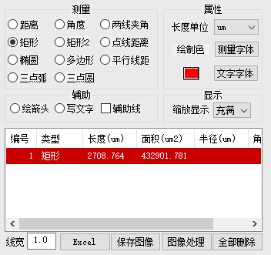
● Image Measurement and Archiving: A variety of measurement tools are available (including distance, angle, included angle between two lines, rectangle, distance from point to line, ellipse, polygon, distance between parallel lines, three-point arc, three-point circle, etc.). It supports drawing arrows, adding text annotations, inserting auxiliary lines, and adjusting line widths. Multiple length units are selectable; the color, size, and style of the font for measurement data are also customizable. Measurement data can be summarized and exported as an Excel spreadsheet.
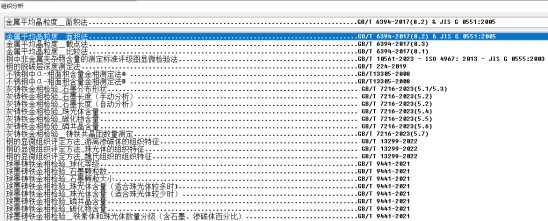
● Microstructure Analysis Function: The software library offers a wide range of standard detection modules, covering microstructure analysis standards such as GB/ASTM/ISO/DIN/QC/JB/DL/TB/SS. Standard numbers in the software library can be updated, and new standards are available for free upgrade. It provides three metallographic rating functions: automatic, comparative, and auxiliary. The function is easy to use, concise, efficient, and ensures accurate and reliable measurement.
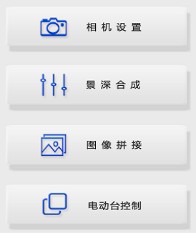
● Advanced Function Modules:EDF (Extended Depth of Field) Function, Image Stitching Function / Image Mosaicing Function
● Advanced Customization Functions: Customized microscope motorized stage control function, image confocal function, 3D optical mapping function, image database function, etc.
● AI Microstructure Analysis Function: Customizable AI microstructure analysis modules are available. It utilizes artificial intelligence to complete the entire microstructural analysis and detection process, enabling automatic identification and analysis of material microstructures. The operation process is simple, which reduces the labor intensity of personnel and improves the efficiency of material detection.
● National Standard Image Library: It contains hundreds of national standard images for customers' learning and reference.

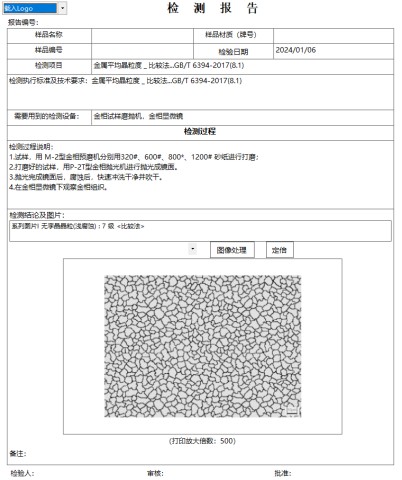
● Diversified Report Templates: It automatically generates metallographic microstructure analysis reports with both pictures and texts. Users can choose to generate report formats with a single module or multiple modules. Report templates allow modifications such as adding company logos, company names, and testing processes. Customized report templates can be created according to specific needs.
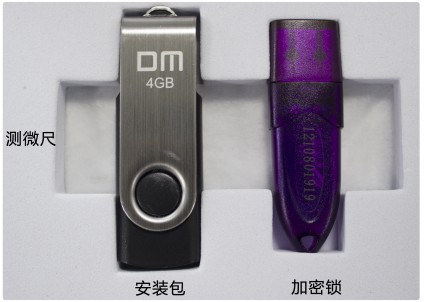
Composition of FMIA2025 Version Metallographic Analysis Software System:
1. Software Program FMIA2025 (USB Flash Drive);
2. Encryption Dongle: USB Type + Dynamic Code Verification;
3. Written Materials: User Manual (Stored on the USB Flash Drive);
4.Micrometer Scale: Graduation Value 0.01mm.
Shandong Laishi Automation Technology Co., Ltd. (hereinafter referred to as "Laishi") is composed of a technical team with more than 10 years of research and development and manufacturing experience. The registered capital of the company is 3 million yuan. We specialize in the research and development, production, and sales of various desktop hardness testers and metallographic sampling equipment, and provide professional research and sales services for physical and chemical testing instruments, laboratory equipment, analytical equipment, and automation equipment.
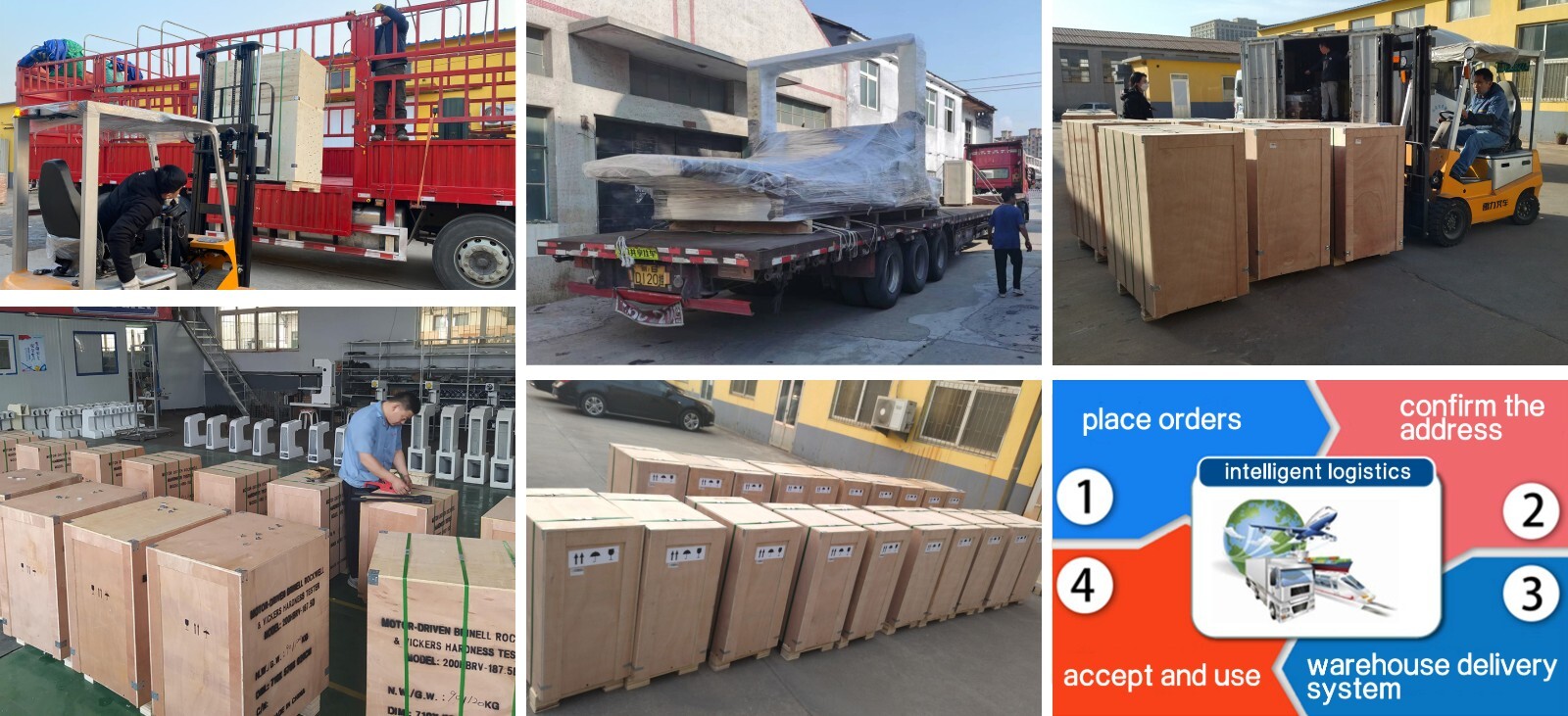
Packaging and Shipping
Have an inquiry or some feedbak for us? Fill out the form below to contact our team.
Related Product Recommendations
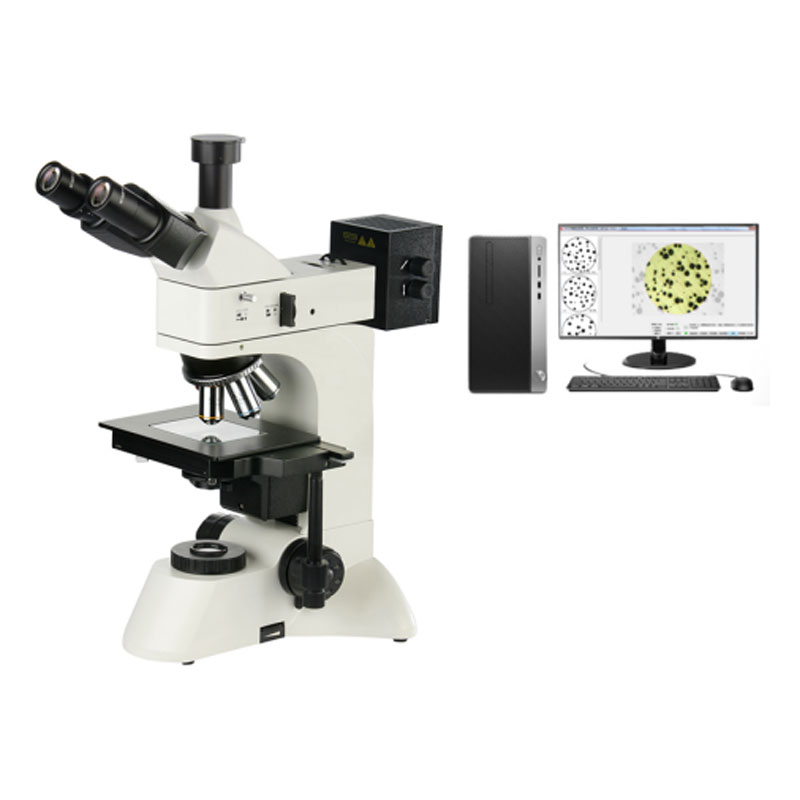
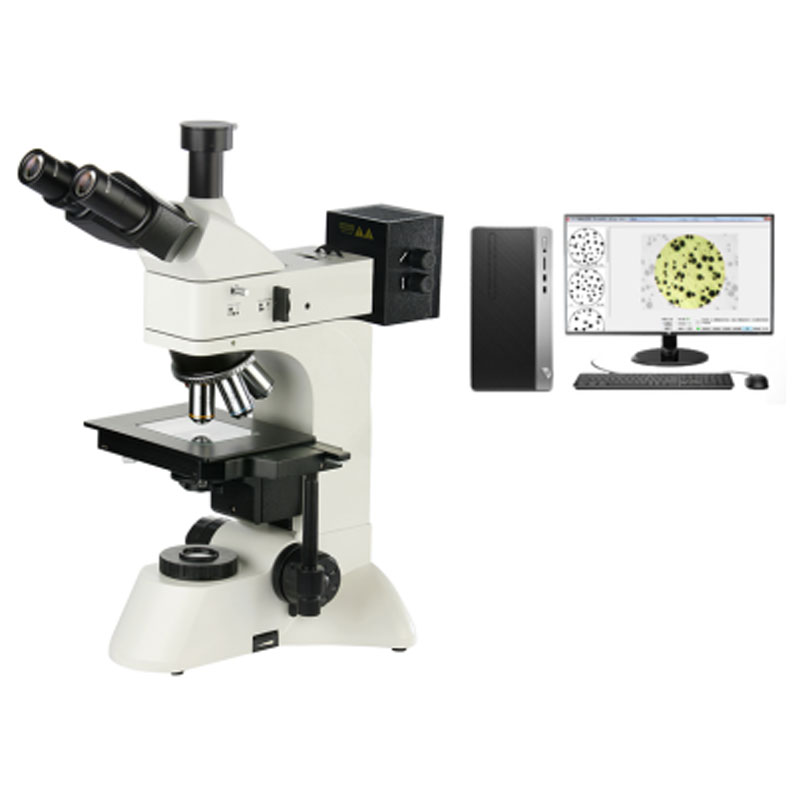
 RX-50MW Computerized Research-Grade Metallurgical MicroscopeMore Details +
 FZ611-W Upright Metallographic MicroscopeMore Details +
 FZ511-W Computerized Transmitted-Reflected Metallurgical MicroscopeMore Details +
 FZ51-W Computerized Upright Metallurgical MicroscopeMore Details +
 FL8500W Computerized Metallographic MicroscopeMore Details +
 FL8000W Computerized Metallographic MicroscopeMore Details +
 FL7500W Computerized Metallographic MicroscopeMore Details +
 FL7000W Computerized Metallographic MicroscopeMore Details +
 CX-40MW Computer-type Gold Phase MicroscopeMore Details +
 BH200M-W Computer-type Gold Phase MicroscopeMore Details +
Search Starts Here
Our Email