






‹
›
‹
›
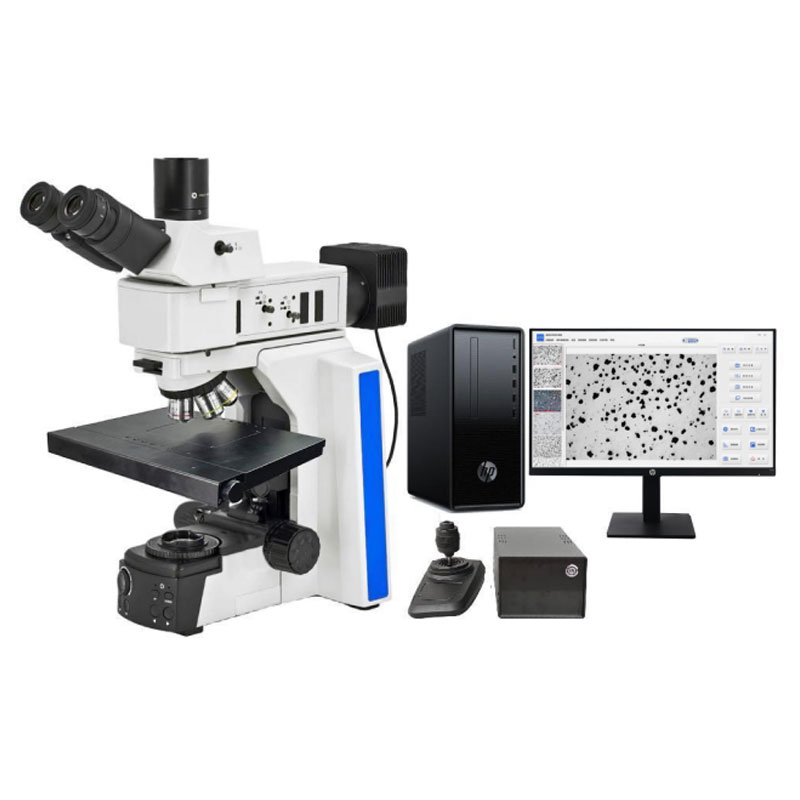
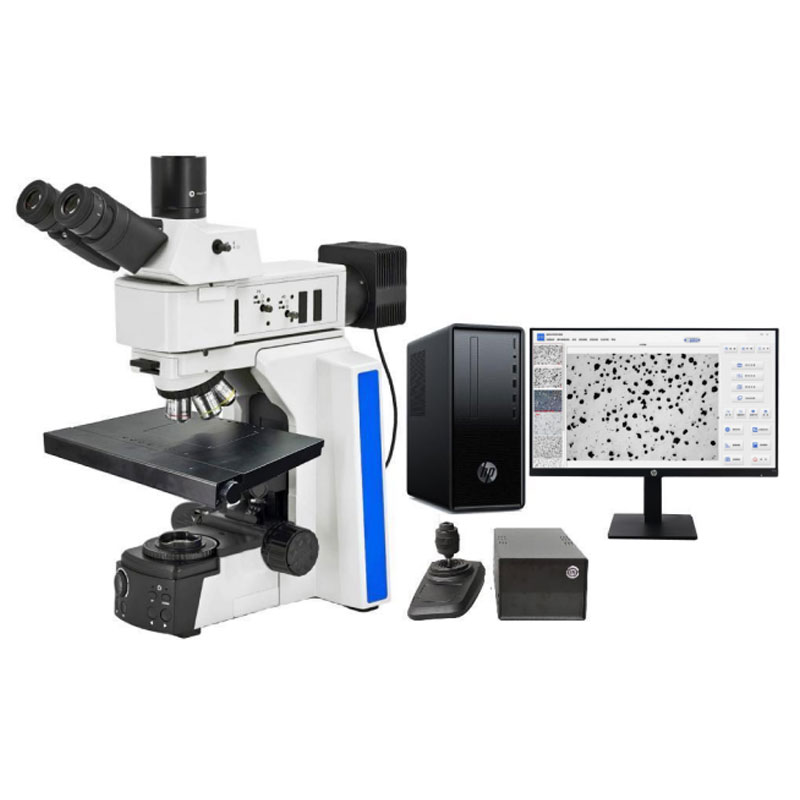
FJX-51XY Fully Automatic Metallurgical Microscope
Overview of FJX-51XY Fully Automatic Metallographic Microscope
The FJX-51XYZ fully automatic metallographic microscope features excellent imaging performance and a comfortable operating experience, providing customers with cost-effective metallographic analysis and industrial inspection solutions. The X-Y motorized stage enables full-size scanning of images and high-performance image synthesis.
High-precision internal positioning 5-hole bright field encoding converter, brightness memory function.
The coded objective turret integrates the microscope's hardware settings with our company's FCL-RS image measurement software. The magnification of the objective is displayed on the screen, and when switching magnifications, the calibration values recorded in the software are automatically adjusted, eliminating measurement errors caused by forgetting to switch the software magnification.
The brightness memory function can remember the illumination brightness when using each objective lens. When different objective lenses are switched, it automatically adjusts the light intensity, reducing visual fatigue and improving work efficiency.
The newly designed integrated T-shaped frame, made of all-metal high-pressure die-casting, has excellent stability. When observing at high magnification, the image plane remains stable without jitter, further ensuring the detection accuracy of high-magnification measurements.
The epi-illuminator uses a Koehler illumination system, with a field diaphragm and an aperture diaphragm, and pre-set slots for polarizers, analyzers, and filters. A single 10W LED warm white light illumination can minimize the observer's visual fatigue to the greatest extent.
The field stop and aperture stop use a pull rod device, with adjustable centers, which can flexibly adjust the size of the illumination range and effectively avoid the influence of stray light on the image.
The polarizer and analyzer can achieve simple polarized light observation .
Configuration Table for FJX-51XYZ Fully Automatic Metallographic Microscope
FMIA2025 Genuine Metallographic Image Analysis Software
Introduction to FMIA2025 Genuine Metallographic Image Analysis Software:
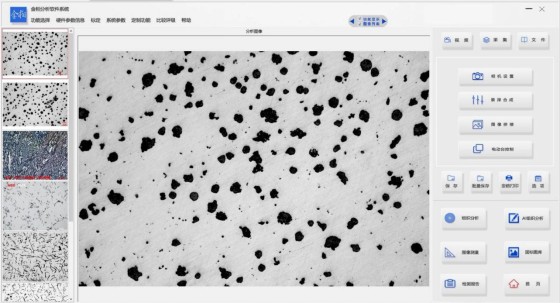
The FMIA2025 Metallographic Image Analysis Software is developed by our company in response to the current needs of foundry enterprises, auto parts enterprises, heat treatment enterprises, bearing steel industry, power system industry, railway parts industry, and various related inspection companies for metallographic inspection. To improve product qualification rates and assist in enhancing the inspection capabilities of laboratories, we have collected the requirements and suggestions of Subject-Matter Experts from various industries and developed a brand-new metallographic image analysis software system.
The FMIA 2025 Edition Metallographic Image Analysis Software has undergone a comprehensive overhaul and upgrade. The system encompasses a vast number of domestic and international metallographic testing standards, integrates quantitative analysis and qualitative analysis, and features newly added depth-of-field synthesis and image field stitching functions. With a simple interface, it can continuously capture multi-field images, centrally conduct image structure analysis, is more convenient to operate, eliminates various cumbersome steps of the previous software, and makes testing faster and more efficient.
A brand-new "Professional-Precise-Efficient" metallographic analysis tool system has been developed to simplify metallographic analysis. When combined with an electric stage, it enables automatic scanning, automatic focusing, automatic image stitching, automatic pore measurement, data statistics, and report output.
The national standard library of the software system contains hundreds of categories, basically covering commonly used metallographic standards and meeting the requirements of metallographic analysis and inspection for the vast majority of units. Relevant categories are specified and opened according to the needs of different industries to meet industry inspection requirements. All modules can be called free of charge for life, and standards can be upgraded free of charge for life.
Given the continuous increase of new materials and imported grade materials, materials and evaluation criteria not yet entered in the software can be customized and entered separately.
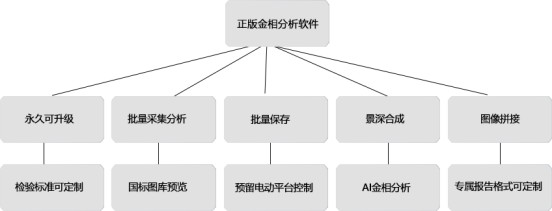
Introduction to the Advantages and Functions of FMIA 2025 Edition Metallographic Analysis Software:
l Batch shooting and collection of video images: Multi-image batch processing functions such as batch shooting, batch naming, batch saving, and batch fixed-magnification printing make the batch sample inspection process more convenient and efficient.
l Advanced Camera Settings:Function settings such as exposure time, gain, sharpness, saturation, gamma value, contrast, brightness, white balance, black balance, etc.
l One-click full-system calibration: The calibration function has been fully upgraded, allowing all objective lens parameters to be calibrated with a single click. Compared with the original calibration method, the new calibration method is more convenient and faster to operate.
l Image Processing Functions: Color Separation, Canary Release Conversion, Threshold Segmentation, Binarization, Image Enhancement, Inversion Adjustment, Sharpening Adjustment, Scratch and Stain Processing, Image Histogram, etc.;
l Fixed-magnification image output:Functions such as multi-image fixed-magnification printing, custom image naming, scale parameter setting, exporting to PDF/Word/Excel, print preview, etc.
l Image Measurement and Archiving: Diverse types of measurement tools (including distance, angle, angle between two lines, rectangle, point-line distance, ellipse, polygon, parallel line distance, three-point arc, three-point circle, etc.), ability to draw arrows, annotate text, add auxiliary lines, modify line width, multiple length units to choose from, multiple options for font color, size, and style of measurement data, and the ability to summarize and export test data to Excel.
l Organizational Analysis Function: The detection standard modules in the software library are diverse, including organizational analysis standards such as GB/ASTM/ISO/DIN/QC/JB/DL/TB/SS. The standard numbers in the software library are upgraded, and new standards can be freely upgraded. It has three metallographic rating functions: automatic, comparative, and auxiliary. It is convenient, simple, and fast to use, with accurate and reliable measurements.
l Advanced customization features:Customize microscope motorized stage control functions, image confocal, 3D light mapping, image database, etc.
l Diverse Report Templates: Automatically generate metallographic structure analysis reports with both text and images, and you can choose to generate single-module or multi-module report styles. Report templates can be modified to add content such as enterprise logos, company names, and inspection processes. Exclusive report templates can be customized according to requirements.
l AI Organizational Analysis Function: Customizable AI organizational analysis module that utilizes artificial intelligence to complete the entire microscopic organizational analysis and inspection process, automatically identifying and analyzing the microscopic structure of materials, with a simple operation process, reducing labor intensity, and improving material inspection efficiency.
l National Standard Drawing Library:Contains hundreds of national standard drawings for customers to learn and refer to.
l EDF Depth of Field Extension Function: For specimens that cannot be focused uniformly due to uneven sample preparation, the software provides a dynamic EDF depth of field shooting function. By adjusting the fine focusing handwheel of the microscope's Z-axis, clear details in the sample will be continuously added to the dynamic EDF display window for dynamic update. The software automatically records clear images at different depths of field and merges them into a single clear image.
l Image stitching function: For customers who need to detect a larger field of view, the software provides an image stitching function. Users can move the X-Y platform of the microscope to meet the need for capturing images with a larger field of view, thus resolving the embarrassment of being unable to capture images due to insufficient microscope field of view. After setting the stitching parameters and image type, click "Auto Stitch" to automatically complete image stitching.
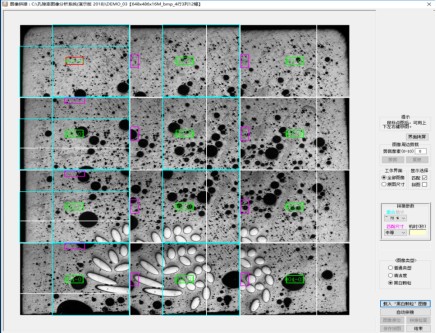
Excerpts from Commonly Used Modules of FMIA2025 Metallographic Analysis Software:
Shandong Laishi Automation Technology Co., Ltd. (hereinafter referred to as "Laishi") is composed of a technical team with more than 10 years of research and development and manufacturing experience. The registered capital of the company is 3 million yuan. We specialize in the research and development, production, and sales of various desktop hardness testers and metallographic sampling equipment, and provide professional research and sales services for physical and chemical testing instruments, laboratory equipment, analytical equipment, and automation equipment.
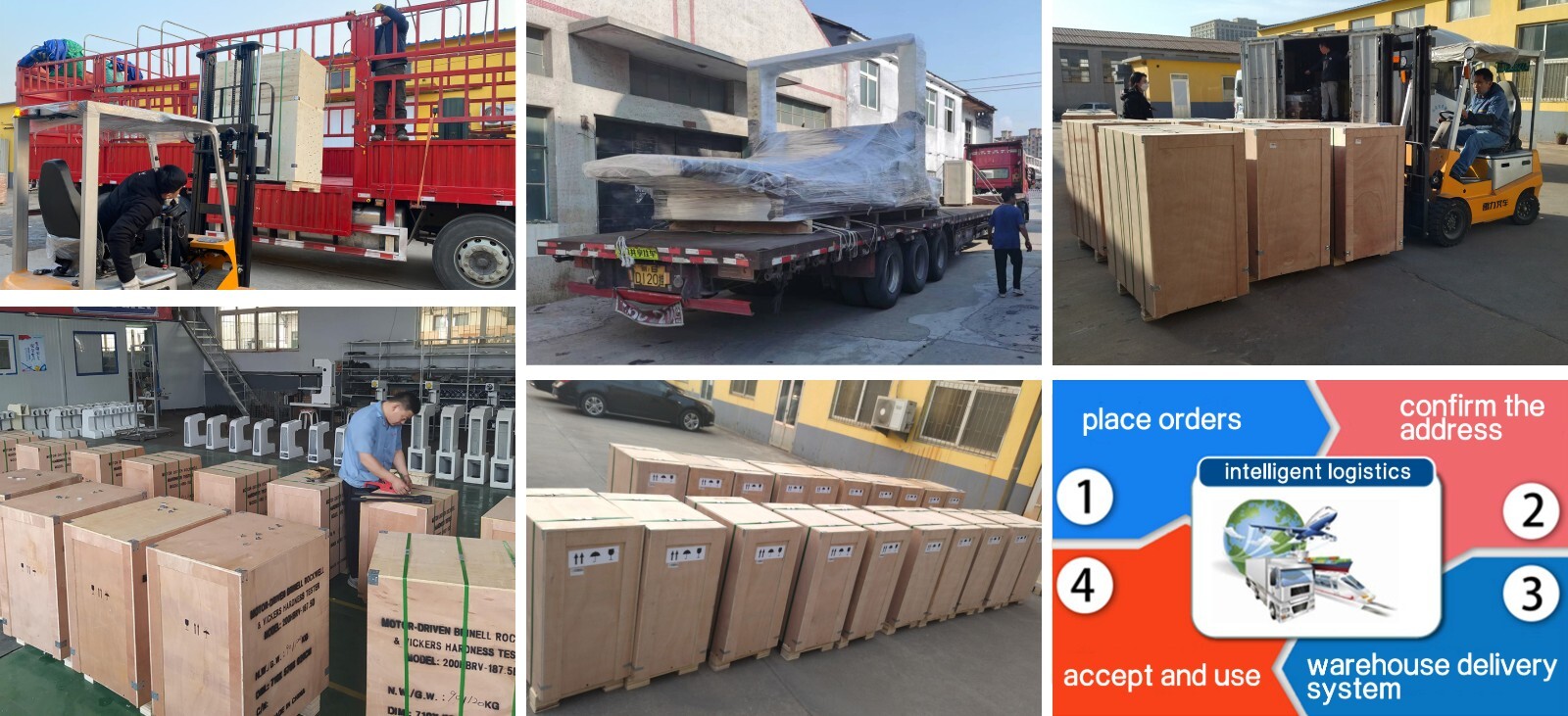
Packaging and Shipping
Have an inquiry or some feedbak for us? Fill out the form below to contact our team.
Related Product Recommendations
") FZ-51XY Fully Automatic Metallurgical Microscope (Manual Focusing on Z-axis)More Details +
FZ-51XY Fully Automatic Metallurgical Microscope (Manual Focusing on Z-axis)More Details + FQJ-51XY Fully Automatic Cleanliness MicroscopeMore Details +
 FKX-51XY Fully Automatic Porosity MicroscopeMore Details +
 FJX-51XYZ Full-Automatic Metallographic MicroscopeMore Details +
 FJX-51XY Fully Automatic Metallurgical MicroscopeMore Details +
Search Starts Here
Our Email